Sewage Pump vs Grinder Pump: Choose by Waste and System
The usual sewage pump vs grinder pump comparison starts with the impeller. It should start one step earlier: what material enters the system, and where must it go after the pump?
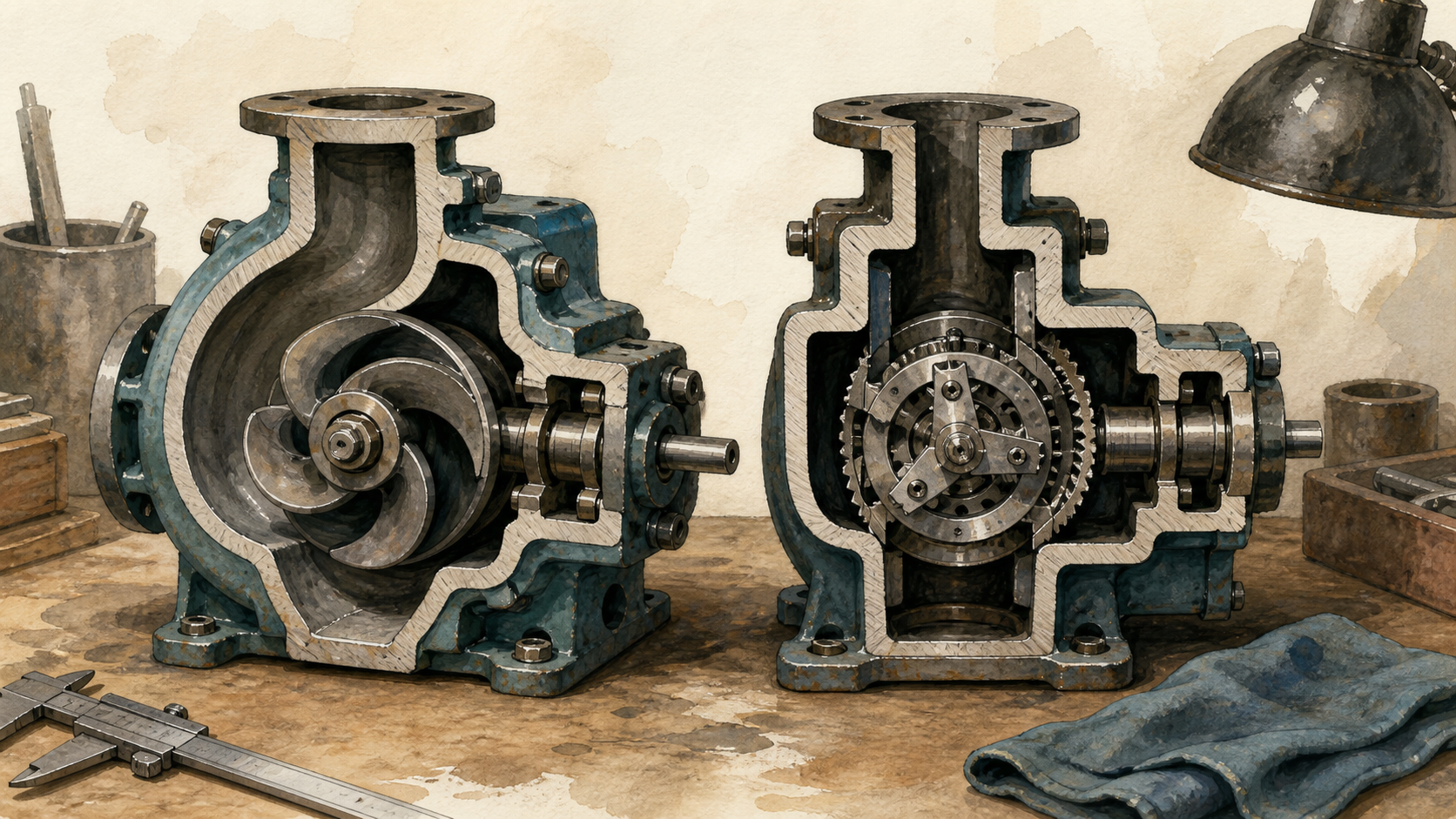
A conventional sewage pump aims to pass solids through a hydraulic passage. A grinder or cutting pump deliberately reduces certain solids before discharge. Both can be the correct answer. Neither is the best answer for every wastewater station.
What a sewage pump is trying to do
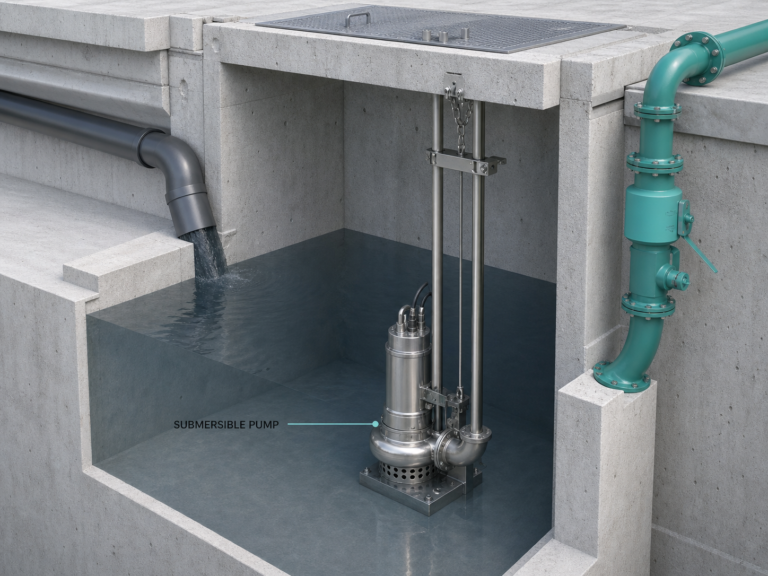
A centrifugal sewage pump may use a channel, vortex, semi-open or other solids-handling impeller. Its job is to move wastewater while allowing the stated solids to pass through the pump and discharge piping.
The advantages can include relatively high flow, a simple flow path and fewer cutting components. The limitations depend on the impeller: long fibres can wrap or bridge, and large passages do not guarantee that wipes will pass without collecting.
The term non clog sewage pump describes an intended application, not immunity from rags, rope, stones or metal objects. The manufacturer’s passage definition and the actual waste stream still matter.
What a grinder or cutting pump changes
A sewage grinder pump uses a cutting or macerating mechanism to reduce suitable solids before they enter the discharge pipe. This can help where long fibres would otherwise block the pump or where a small-bore pressurised sewer is part of the system.
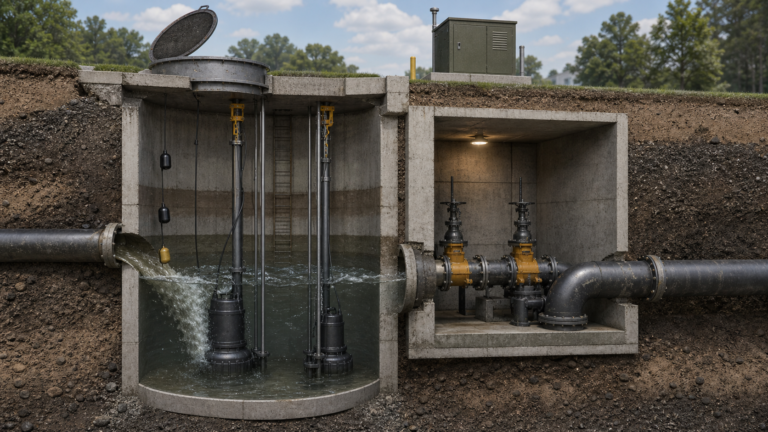
The U.S. EPA describes grinder-pump pressure sewers as systems in which sewage enters a vault, solids are ground and the mixture is discharged into a pressurised pipeline. That system role is different from simply placing a grinder in any municipal wet well.
A submersible cutting pump adds wear surfaces and clearances that must be inspected. Abrasive grit, hard foreign objects and metal can damage or rapidly wear the mechanism. Grinding also does not remove material from the wastewater; it changes particle size and transfers it downstream.
The practical comparison
| Decision factor | Solids-handling sewage pump | Grinder or cutting pump |
|---|---|---|
| Main action | Passes stated solids through the hydraulic passage | Reduces suitable solids before pumping |
| Typical strength | Moderate to high wastewater flow with suitable passage | Fibres and pressure-sewer duties where size reduction is required |
| Main limitation | Rags can wrap, bridge or collect | Cutter wear, sensitivity to hard/abrasive objects, often lower flow per unit |
| Discharge main | Selected for required velocity, loss and solids transport | Can suit smaller pressure mains when the complete system is designed for it |
| Maintenance focus | Impeller, wear clearances, volute and wet-well condition | Cutter condition and clearance in addition to normal pump maintenance |
| Selection question | Can the material pass? | Can the material be cut reliably, and should it be? |
This table is a starting point. Exact capacity and solids limits come from the selected model.
When a solids-handling sewage pump is usually the better fit
Choose the passing approach when the station handles significant flow, the force main is sized for wastewater transport and the incoming solids fit the pump’s stated passage.
It can also be preferable when the site contains abrasive grit that would accelerate cutter wear. In that case, upstream screening, grit control or wet-well housekeeping may solve more of the problem than installing a sharper mechanism.
If fibrous material is occasional rather than continuous, a suitable channel or vortex design combined with good intake geometry may offer simpler maintenance.
When grinding or cutting deserves serious consideration
A fibrous wastewater pump duty may justify a cutting mechanism when wipes, cloth or process fibres are repeatedly confirmed as the blockage source. A grinder may also be part of a purpose-designed pressure sewer serving individual properties or a small cluster.
Before selecting it, confirm:
- Maximum flow and head for one and multiple operating units
- Type, length and concentration of fibres
- Amount of grit, metal and other hard material
- Cutter inspection and replacement procedure
- Minimum force-main velocity and flushing arrangement
- Downstream process tolerance for macerated solids
Do not assume the cutting pump will fix a wet well full of grease. Fats, oils and grease can still coat level sensors, collect material and restrict piping.
A blockage history is better than a guess
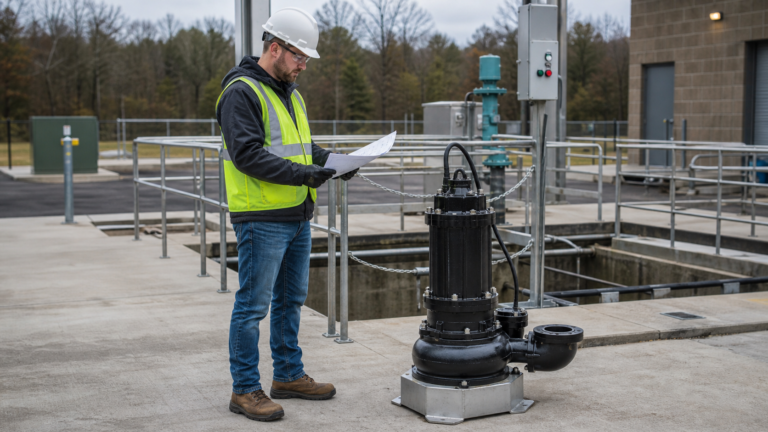
When an existing station blocks, record what is physically removed. Photograph the obstruction. Note operating flow, wet-well level, running current and time since the previous blockage.
Three sites that all report “rags” may need different changes:
- Long wipes wrapped around an impeller may support a cutting or anti-rag hydraulic change.
- Grease holding wipes together may require source control and wet-well cleaning.
- A pump operating far left of its curve may have poor internal velocities even if the impeller passage is adequate.
Replacing the pump without identifying which condition applies can preserve the same failure in a new casing.
Do not forget the force main
A pressure sewer grinder pump and its pipework are selected together. Smaller pipe raises friction for a given flow and can create high velocities or surge. Oversized pipe can reduce scouring velocity and encourage deposition.
Plot the system curve, including simultaneous pump operation where applicable. Confirm check-valve behaviour, air release, flushing and surge risk. The right cutter cannot compensate for a force main that the pump cannot hydraulically serve.
Put maintenance access in the purchase decision
Ask how the unit is lifted, isolated, opened and returned to service. Cutter access, special tools, wear-part availability and adjustment instructions should be clear before purchase.
For an unattended station, protection and alarms matter as much as the impeller. At minimum, consider high level, motor overload or thermal protection, phase condition and moisture detection where supplied.
SHXINHUO’s sewage pumps and cutting pump range serve different waste streams. Send representative material information with flow, head and force-main details so the hydraulic and solids-handling choices can be checked together.
The short answer
Use a sewage pump when the system should pass its defined solids efficiently. Use a grinder or cutting pump when controlled size reduction is genuinely needed and the cutter can tolerate the incoming material.
The selection is not “stronger pump versus weaker pump.” It is passage versus size reduction, evaluated across the whole wastewater system.
Technical references
- U.S. EPA — Wastewater Technology Fact Sheet: Pressure Sewers
- U.S. EPA — Wastewater Technology Fact Sheet: Screening and Grit Removal
- U.S. EPA — Wastewater Technology Fact Sheet: In-Plant Pump Stations
- Hydraulic Institute — Pump FAQs
Data note
The comparison describes general design approaches. Solids passage, cutter capability, flow, head and allowable duty vary by model and must be confirmed from current manufacturer data.