Drainage, Sewage or Cutting Pump: How to Choose the Right Wastewater Pump
“Wastewater” covers very different liquids. Rainwater in a basement sump, grey water from a utility area and raw sewage containing wipes may all enter a submersible pump, but they should not automatically be handled by the same hydraulic design.
The most useful first step is not to compare motor power. It is to describe what is actually in the pit.
Drainage pumps: for relatively clean water
A drainage pump is intended for water with limited solids, such as:
- Basement seepage
- Rainwater removal
- Construction dewatering after screening
- Clean-water tank drainage
- Lightly contaminated sump water
These pumps can use hydraulic passages optimised for water rather than large or fibrous solids. This often supports good efficiency and compact construction.
They are not a safe substitute for a sewage pump simply because the discharge connection fits the pipe. Sand, gravel and fibres can cause rapid wear or blockage if the pump was not designed for them.
For clean-water drainage duties, see the SHXINHUO stainless steel submersible pump.
Sewage pumps: for wastewater containing solids
Sewage pumps are built with wider, more tolerant flow passages and impeller designs intended for wastewater transfer. Typical applications include sewage pits, septic transfer, building lift stations and municipal drainage duties.
Selection should consider:
- Maximum solid size and shape
- Fibre and rag content
- Abrasive material such as sand or grit
- Liquid chemistry and corrosion risk
- Required flow and total head
- Minimum velocity in the discharge line
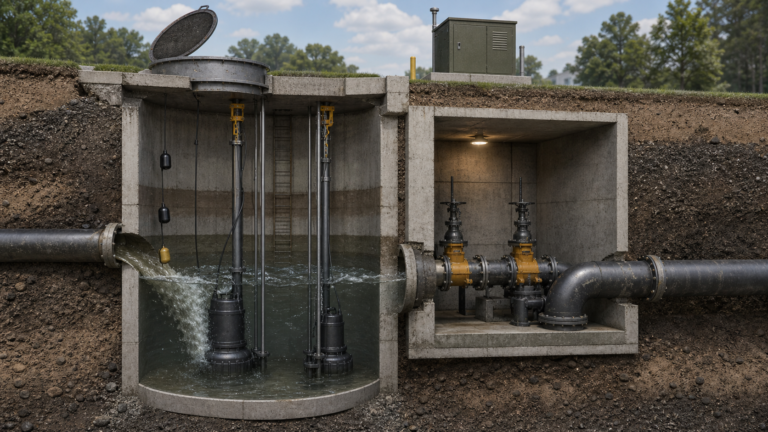
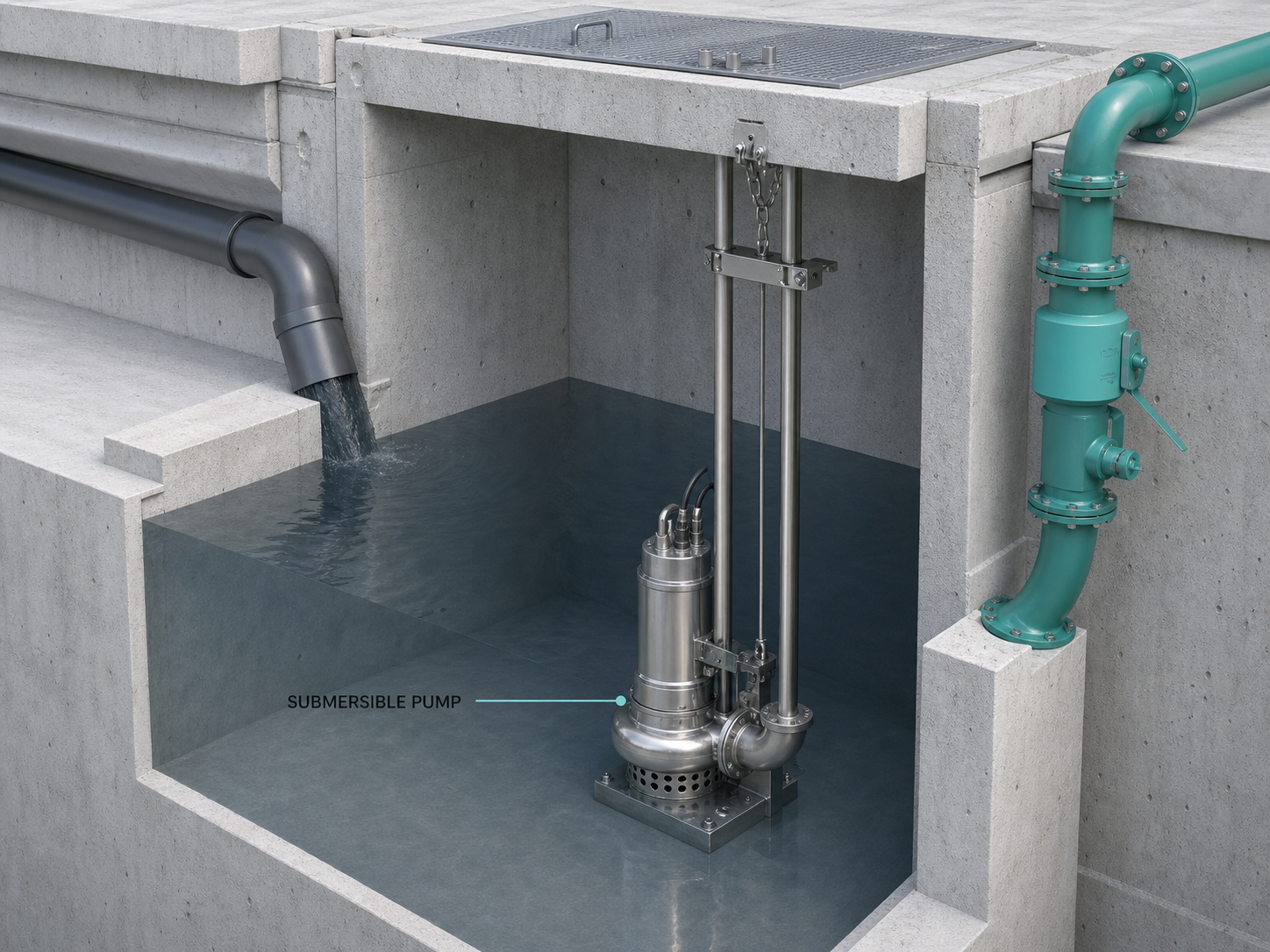
- Wet-well dimensions and installation method
The impeller design may be vortex, channel, single-vane or another solids-handling form. Each balances efficiency, free passage and clog resistance differently.
See the SHXINHUO stainless steel sewage pump for the relevant product category.
Cutting pumps: for fibre-rich, clog-prone wastewater
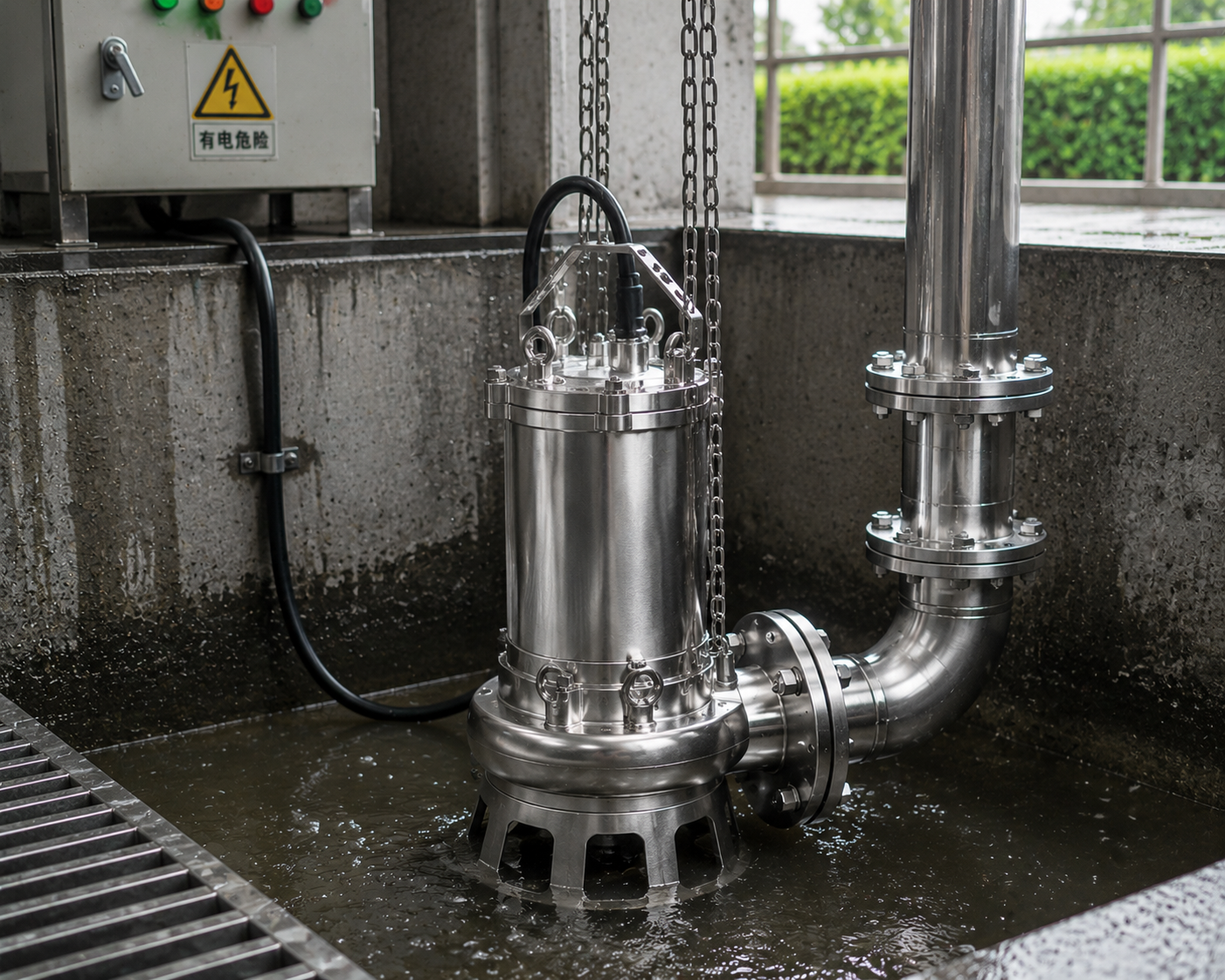
Cutting or grinder-style pumps reduce soft solids and fibrous material before it enters the discharge line. They can be useful where wipes, cloth, stringy waste or other soft debris repeatedly causes blockage, and where the system has been designed for a cutting pump’s operating characteristics.
Cutting action is not a universal advantage. Hard mineral solids can damage cutting components, and a cutter may require more maintenance in abrasive service. The downstream pipe, check valve and control system must also be compatible with the reduced solids and expected flow.
For fibre-prone wastewater, see the SHXINHUO stainless steel cutting pump.
Why “solids passage” does not tell the whole story
Pump specifications often state a free-passage or throughlet diameter. It is a useful value, but it should not be treated as a complete measure of clog resistance.
Xylem’s wastewater research points out that modern sewage often contains long synthetic fibres and wipes rather than hard spherical objects. Fibres can catch on the leading edge of an impeller and form a rag ball even when the nominal passage is large. Partial clogging reduces flow and efficiency before the pump fully blocks; drag can also increase input power and trip the motor.
Ask the supplier about hydraulic design and experience with the actual waste stream, not only the largest round object that can pass through the pump.
Calculate the real duty point
Wastewater pump sizing follows the same basic hydraulic rule as other centrifugal pumps: the operating point is where the pump curve meets the system curve. But lift stations have several details that are easy to miss.
Total head includes:
- Static lift between wet-well level and discharge point
- Friction loss in the rising main
- Loss through elbows, valves and check valves
- Pressure at the receiving system, if any
Calculate the duty at relevant wet-well levels. As the liquid level falls, static lift may increase. If two pumps can operate together, plot the combined curve and verify the resulting velocity and power.
Keep enough velocity in the rising main
Low velocity allows solids to settle. Very high velocity increases friction loss and wear. The required self-cleansing velocity depends on the wastewater, pipe and governing design standard, so it should be established by the project engineer rather than chosen from a universal rule.
This is also why a very large discharge pipe is not always beneficial. It reduces friction but may allow settling at normal pump flow. Pipe diameter and pump duty must be selected together.
Wet-well layout affects reliability
A good pump can perform poorly in a badly designed pit. Review:
- Inlet position and turbulence
- Dead zones where solids accumulate
- Minimum submergence
- Start and stop levels
- Pump spacing
- Access for lifting and maintenance
- Ventilation and hazardous-area requirements
- Float, level-sensor and alarm arrangement
Frequent starts overheat motors and wear contactors. Excessively wide level bands can allow long retention time, odour and sedimentation. Control levels should balance storage, start frequency and submergence.
Materials and sealing matter
Stainless steel can be useful for water-contact and corrosion-sensitive environments, but “stainless” is not a guarantee against every chemical. Chloride concentration, pH, temperature and cleaning chemicals all affect compatibility.
For abrasive wastewater, hydraulic wear may be more important than general corrosion. For sewage service, inspect cable entry, shaft seal arrangement and motor protection. A leakage sensor, winding-temperature protection or external overload protection may be appropriate depending on pump size and criticality.
A practical wastewater-pump enquiry checklist
Provide the supplier with:
- Source of the wastewater
- Description of solids, fibres and abrasive material
- Required flow and total dynamic head
- Wet-well dimensions and liquid-level range
- Rising-main diameter, length and material
- Valve and fitting details
- Number of pumps and operating sequence
- Liquid temperature, pH and chemical exposure
- Power supply and control requirements
- Installation, lifting and access constraints
Photographs or a short video of the pit and removed debris can be more useful than the word “sewage.”
Select for the liquid, not the label
Use a drainage pump for relatively clean water, a sewage pump for wastewater containing solids and a cutting pump where fibrous soft debris is the dominant clogging risk. Then verify the hydraulic duty, pipe velocity, materials, controls and pit layout.
The correct choice is the pump that continues to deliver the required flow in the real waste stream—not the model with the largest motor or the largest number in one specification column.
SHXINHUO manufactures stainless steel submersible drainage pumps, sewage pumps and cutting pumps for building drainage, sump, dewatering and wastewater-transfer applications. For OEM/ODM or project enquiries, the useful information is the waste stream, flow, total head, pit arrangement and electrical standard. That allows the SHXINHUO team to recommend the relevant hydraulic type before discussing model details, packaging or private-label requirements.