Single-Stage vs Multistage Centrifugal Pumps: Which Layout Fits the Duty?
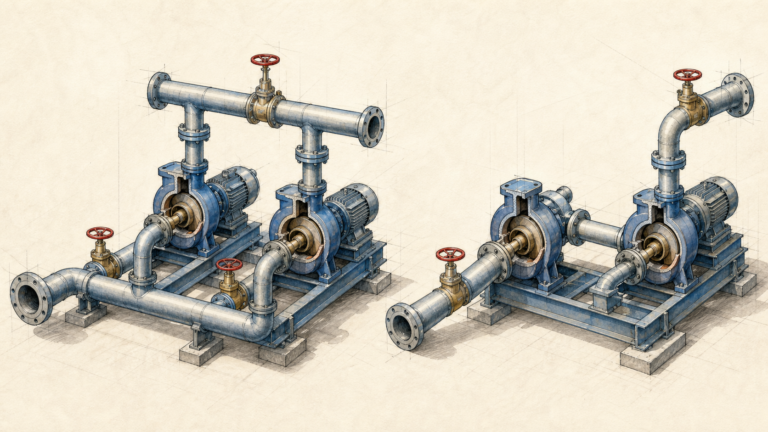
The difference sounds simple: a single-stage pump has one impeller, while a multistage pump has two or more impellers arranged in series. The practical choice is more interesting.
Adding stages mainly increases head. It does not automatically make a pump better, more efficient or more suitable for every application. A well-selected single-stage pump can be the most robust choice for moderate-head circulation and transfer. A multistage pump becomes attractive when the system needs higher pressure from a compact unit.
What one stage does
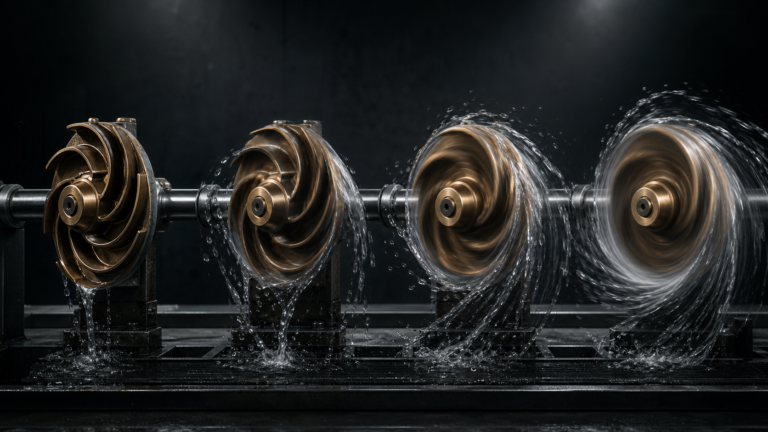
In a centrifugal pump, the impeller transfers energy to the liquid. The casing converts part of the liquid velocity into pressure. With one impeller, the pump produces a characteristic relationship between flow and head.
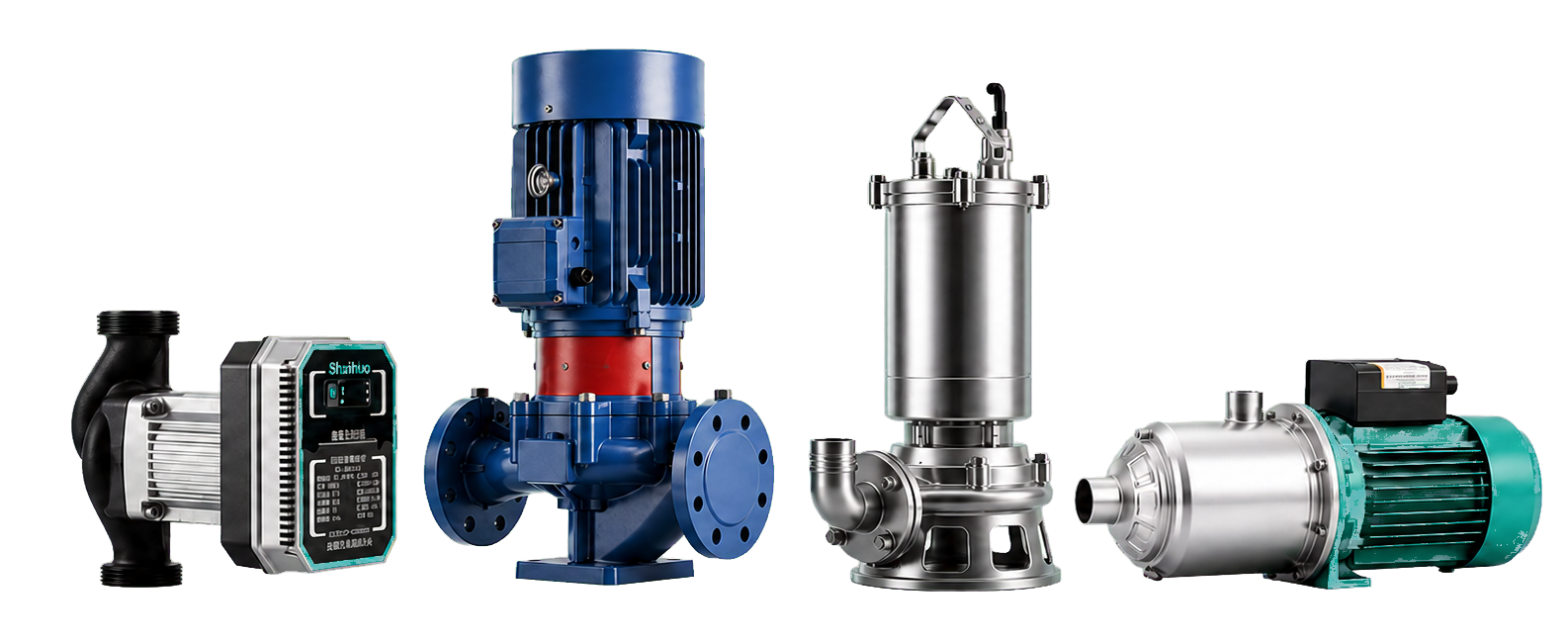
Single-stage pumps cover a wide range of duties. Common layouts include:
- End-suction pumps
- Inline pipeline pumps
- Close-coupled domestic pumps
- Split-case pumps
- Single-stage submersible pumps
They are widely used for HVAC circulation, clean-water transfer, irrigation, drainage and general building services.
How multistage pumps build pressure
In a multistage pump, discharge from one impeller passes to the next. Each stage adds head while approximately the same flow continues through all stages. This is hydraulically similar to operating pumps in series: head increases, but the stages do not multiply flow.
This makes multistage pumps suitable for:
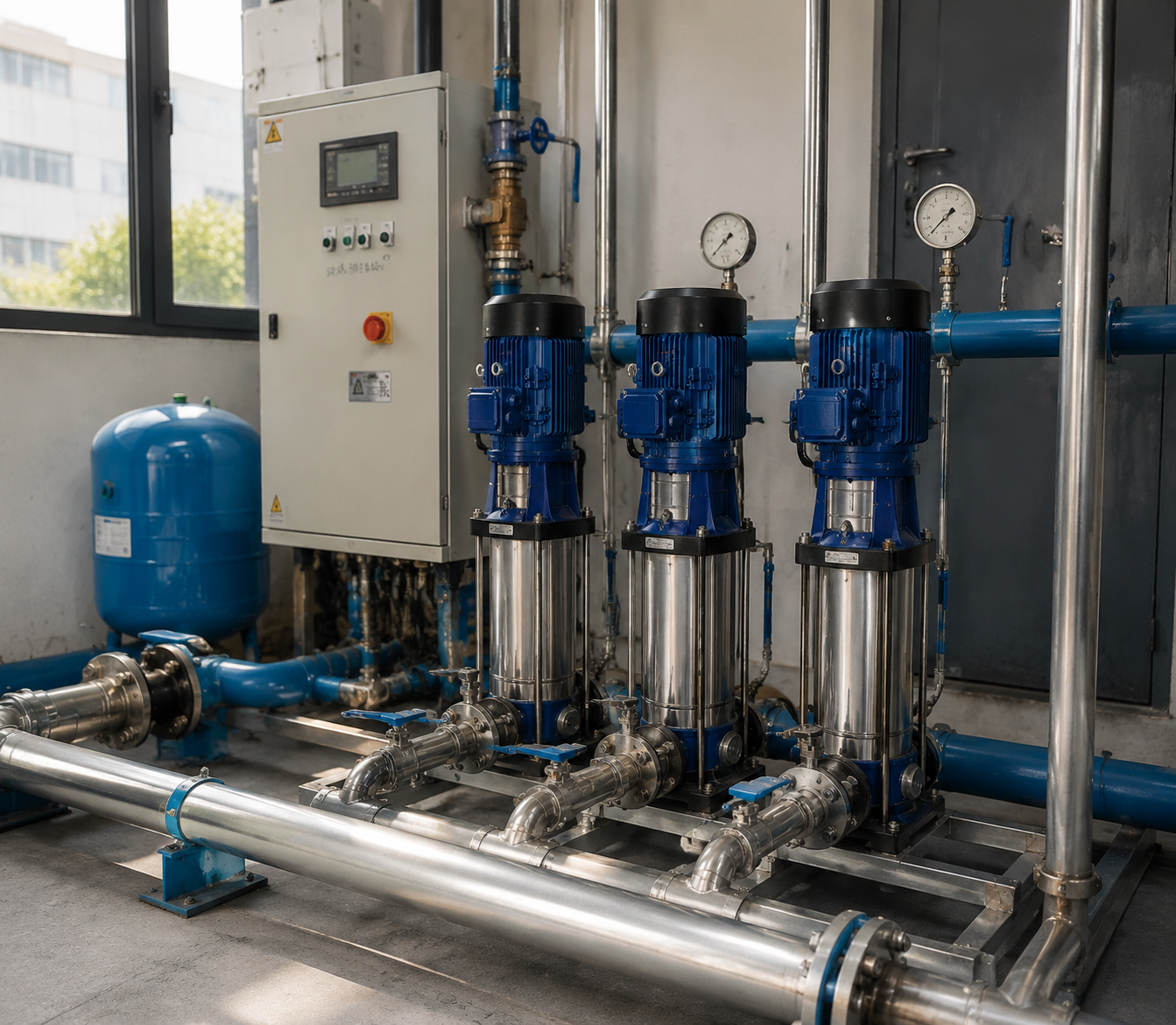
- Building pressure boosting
- Boiler feed and condensate duties, with appropriate construction
- Reverse-osmosis and filtration feed
- High-head clean-water transfer
- Deep-well and borehole pumping
- Process water systems
Vertical multistage pumps provide high head with a small floor footprint. Horizontal multistage pumps can be convenient for compact packages, domestic boosting and installations with height constraints.
Head and flow: use the system duty first
Do not decide by building height or pipe connection alone. Calculate the required flow and total dynamic head, then compare the duty with available pump curves.
For moderate head and relatively high flow, a single-stage pump may offer a simpler and cost-effective selection. For medium-to-high head at moderate flow, a multistage design can reach the duty without an unusually large impeller or excessive rotational speed.
The operating point should remain within the manufacturer’s allowed region, preferably near the best efficiency point over the most important part of the load profile.
Efficiency is not determined by stage count
It is tempting to assume that more stages mean more efficiency. Actual efficiency depends on hydraulic design, pump size, specific speed, clearances, operating point and motor performance.
A multistage pump has additional internal passages, seals and interfaces. It can still be highly efficient when designed and selected for a high-head duty. A single-stage pump can be inefficient if oversized and heavily throttled.
Compare complete curves at the required flow and head. For variable demand, include the effect of speed control and staging rather than comparing only the catalogue peak efficiency.
Installation footprint and pipework
Inline single-stage pumps can be installed directly in a pipeline and save floor space in HVAC and building-service plant rooms. Their suction and discharge connections are often aligned, simplifying pipework.
Vertical multistage pumps also have a small floor footprint but need vertical service clearance. Horizontal multistage pumps require more floor length but can fit under low ceilings and may offer straightforward access depending on construction.
Check more than the base dimensions:
- Space to remove the motor, seal or cartridge
- Lifting access
- Pipe loads and support
- Foundation and vibration isolation
- Drainage around the pump
- Electrical-panel and VFD clearance
A compact pump is not a compact installation if it cannot be serviced in place.
Suction conditions can decide the choice
High-head capability on the discharge side does not remove suction limitations. The first-stage impeller still needs adequate NPSH margin. Multistage pumps may be especially sensitive because the first stage supplies every stage downstream.
Review NPSHR across the intended flow range. Keep suction pipe losses low and avoid selecting a pump that must operate near runout to reach the required flow. If the source is below the pump, consider whether a self-priming arrangement, submerged pump or revised plant layout is more appropriate.
Maintenance and water quality
Single-stage pumps generally have fewer hydraulic components, which can simplify disassembly and inspection. Multistage pumps have more impellers, diffusers and internal clearances. Correct assembly and clean water are important for maintaining performance.
For water containing solids, fibres or abrasive material, neither a standard clean-water single-stage nor a close-clearance multistage pump should be assumed suitable. Use a solids-handling hydraulic design selected for the liquid.
Material choice should reflect corrosion, temperature and water chemistry. Seal selection must consider pressure as well as liquid compatibility; the seal chamber of a high-head pump may experience demanding conditions even when the pumped liquid is clean water.
Variable speed changes the operating range—not the basic physics
A VFD shifts the pump curve by changing speed. This can help a single-stage or multistage pump follow variable demand and reduce throttling loss.
However, speed control has limits. Minimum speed, motor cooling, resonance, minimum flow and stable operating region still apply. A VFD should not be used to force a poorly matched pump to cover an extreme duty range.
For broad demand variation, multiple pumps in parallel can provide better staging. For a very high pressure ratio, pressure zoning or series arrangements may be better than one pump creating pressure that is later reduced.
A quick comparison
| Selection factor | Single-stage pump | Multistage pump |
|---|---|---|
| Main hydraulic strength | Moderate head, broad flow coverage | Higher head at similar flow |
| Typical applications | HVAC circulation, transfer, irrigation, general services | Pressure boosting, filtration feed, high-head transfer |
| Construction | One impeller | Multiple impellers in series |
| Service complexity | Usually simpler | More internal components and clearances |
| Footprint | Inline models are very compact | Vertical models give high head in a small footprint |
| Suction check | Required | Required, especially at the first stage |
| Solids handling | Only with a suitable hydraulic design | Standard clean-water designs are generally unsuitable for solids |
Match SHXINHUO series to the application
SHXINHUO has more than 25 years of pump-manufacturing experience and operates two production bases, supporting standard supply as well as OEM/ODM and private-label projects. For single-stage clean-water circulation and transfer, the ISG single-stage pipeline centrifugal pump and compact PUN centrifugal pump are relevant starting points.
For higher-head clean-water duties, compare the TD multistage pipeline centrifugal pump, CDL vertical multistage centrifugal pump and MHI horizontal multistage centrifugal pump.
The model name should come after the hydraulic calculation. Provide required flow, total head, suction conditions, liquid data, operating profile and control requirements. That information determines whether one stage or several stages are the more reliable choice.